Guided Reading Activity 12-2 Biological and Social Motives
Chapter i. Introducing Social Psychology
Defining Social Psychology: History and Principles
- Definesocial psychology.
- Review the history of the field of social psychology and the topics that social psychologists report.
- Summarize the principles of evolutionary psychology.
- Draw and provide examples of the person-situation interaction.
- Review the concepts of (a) social norms and (b) cultures.
The field of social psychology is growing rapidly and is having an increasingly important influence on how we call back nearly human behavior. Newspapers, magazines, websites, and other media frequently report the findings of social psychologists, and the results of social psychological inquiry are influencing decisions in a wide variety of areas. Let'due south begin with a curt history of the field of social psychology so turn to a review of the basic principles of the science of social psychology.
The History of Social Psychology
The science of social psychology began when scientists first started to systematically and formally mensurate the thoughts, feelings, and behaviors of homo beings (Kruglanski & Stroebe, 2011). The earliest social psychology experiments on group behavior were conducted before 1900 (Triplett, 1898), and the beginning social psychology textbooks were published in 1908 (McDougall, 1908/2003; Ross, 1908/1974). During the 1940s and 1950s, the social psychologists Kurt Lewin and Leon Festinger refined the experimental arroyo to studying behavior, creating social psychology equally a rigorous scientific discipline. Lewin is sometimes known equally "the father of social psychology" because he initially developed many of the important ideas of the discipline, including a focus on the dynamic interactions among people. In 1954, Festinger edited an influential book called Research Methods in the Behavioral Sciences, in which he and other social psychologists stressed the need to measure variables and to utilise laboratory experiments to systematically test research hypotheses about social behavior. He also noted that information technology might be necessary in these experiments to deceive the participants well-nigh the true nature of the research.
Social psychology was energized by researchers who attempted to sympathize how the German language dictator Adolf Hitler could have produced such farthermost obedience and horrendous behaviors in his followers during the Earth War II. The studies on conformity conducted by Muzafir Sherif (1936) and Solomon Asch (1952), as well equally those on obedience by Stanley Milgram (1974), showed the importance of conformity pressures in social groups and how people in authority could create obedience, even to the extent of leading people to crusade severe harm to others. Philip Zimbardo, in his well-known "prison study" (Haney, Banks, & Zimbardo, 1973), constitute that the interactions of male college students who were recruited to play the roles of guards and prisoners in a simulated prison became so vehement that the written report had to exist terminated early on.
Social psychology rapidly expanded to written report other topics. John Darley and Bibb Latané (1968) developed a model that helped explain when people do and do not help others in need, and Leonard Berkowitz (1974) pioneered the study of human aggression. Meanwhile, other social psychologists, including Irving Janis (1972), focused on group behavior, studying why intelligent people sometimes fabricated decisions that led to disastrous results when they worked together. Still other social psychologists, including Gordon Allport and Muzafir Sherif, focused on intergroup relations, with the goal of understanding and potentially reducing the occurrence of stereotyping, prejudice, and bigotry. Social psychologists gave their opinions in the 1954 Brown 5. Board of Instruction U.South. Supreme Court case that helped end racial segregation in American public schools, and social psychologists withal oftentimes serve as expert witnesses on these and other topics (Fiske, Bersoff, Borgida, Deaux, & Heilman, 1991). In contempo years insights from social psychology have even been used to design anti-violence programs in societies that have experienced genocide (Staub, Pearlman, & Bilali, 2010).
The latter part of the 20th century saw an expansion of social psychology into the field of attitudes, with a particular emphasis on cerebral processes. During this fourth dimension, social psychologists developed the first formal models of persuasion, with the goal of understanding how advertisers and other people could present their messages to brand them most effective (Eagly & Chaiken, 1993; Hovland, Janis, & Kelley, 1963). These approaches to attitudes focused on the cognitive processes that people apply when evaluating messages and on the relationship between attitudes and beliefs. Leon Festinger'southward important cognitive dissonance theory was developed during this time and became a model for later enquiry (Festinger, 1957).
In the 1970s and 1980s, social psychology became even more than cognitive in orientation every bit social psychologists used advances in cerebral psychology, which were themselves based largely on advances in reckoner engineering science, to inform the field (Fiske & Taylor, 2008). The focus of these researchers, including Alice Eagly, Susan Fiske, E. Tory Higgins, Richard Nisbett, Lee Ross, Shelley Taylor, and many others, was on social knowledge—an agreement of how our knowledge almost our social worlds develops through experience and the influence of these knowledge structures on memory, information processing, attitudes, and judgment. Furthermore, the extent to which humans' conclusion making could exist flawed due to both cognitive and motivational processes was documented (Kahneman, Slovic, & Tversky, 1982).
In the 21st century, the field of social psychology has been expanding into still other areas. Examples that nosotros consider in this volume include an interest in how social situations influence our health and happiness, the important roles of evolutionary experiences and cultures on our behavior, and the field of social neuroscience—the report of how our social behavior both influences and is influenced by the activities of our brain (Lieberman, 2010). Social psychologists continue to seek new ways to measure and understand social behavior, and the field continues to evolve. We cannot predict where social psychology will be directed in the future, merely we take no dubiousness that it will nonetheless be alive and vibrant.
The Person and the Social Situation
Social psychology is the study of the dynamic relationship between individuals and the people around them. Each of us is different, and our individual characteristics, including our personality traits, desires, motivations, and emotions, accept an important touch on our social behavior. Simply our behavior is too greatly influenced by the social situation—the people with whom nosotros interact every twenty-four hours. These people include our friends and family unit, our classmates, our religious groups, the people we encounter on Television set or read about or collaborate with online, as well as people we think well-nigh, remember, or fifty-fifty imagine.
Social psychologists believe that human being behavior is determined past both a person's characteristics and the social situation. They likewise believe that the social state of affairs is frequently a stronger influence on behavior than are a person's characteristics.
Social psychology is largely the study of the social situation. Our social situations create social influence—the procedure through which other people modify our thoughts, feelings, and behaviors and through which we change theirs. Maybe you can already run into how social influence affected Raoul Wallenberg's choices and how he in plow influenced others effectually him.
Kurt Lewin formalized the joint influence of person variables and situational variables, which is known as the person-state of affairs interaction, in an important equation:
Behavior = f (person, social situation).
Lewin's equation indicates that the behavior of a given person at any given time is a function of (depends on) both the characteristics of the person and the influence of the social state of affairs.
Evolutionary Adaptation and Human being Characteristics
In Lewin's equation, person refers to the characteristics of the private man beingness. People are born with skills that allow them to successfully interact with others in their social world. Newborns are able to recognize faces and to respond to human being voices, young children learn language and develop friendships with other children, adolescents become interested in sex and are destined to autumn in dear, most adults marry and have children, and most people usually get forth with others.
People accept these detail characteristics because we have all been similarly shaped through human evolution. The genetic lawmaking that defines human beings has provided us with specialized social skills that are of import to survival. Just as keen eyesight, concrete forcefulness, and resistance to disease helped our ancestors survive, so as well did the tendency to engage in social behaviors. We apace make judgments about other people, help other people who are in demand, and enjoy working together in social groups because these behaviors helped our ancestors to conform and were passed forth on their genes to the side by side generation (Ackerman & Kenrick, 2008; Barrett & Kurzban, 2006; Pinker, 2002). Our extraordinary social skills are primarily due to our large brains and the social intelligence that they provide united states with (Herrmann, Call, Hernández-Lloreda, Hare, & Tomasello, 2007).
The supposition that human nature, including much of our social behavior, is adamant largely past our evolutionary past is known every bit evolutionary accommodation (Osculation & Kenrick, 1998; Workman & Reader, 2008). In evolutionary theory, fitness refers to the extent to which having a given feature helps the individual organism to survive and to reproduce at a higher rate than do other members of the species who do not have the characteristic. Fitter organisms pass on their genes more successfully to later generations, making the characteristics that produce fitness more likely to go role of the organisms' nature than are characteristics that do not produce fettle. For example, information technology has been argued that the emotion of jealousy has survived over fourth dimension in men considering men who experience jealousy are more fit than men who do not. According to this thought, the experience of jealousy leads men to protect their mates and guard against rivals, which increases their reproductive success (Kiss, 2000).
Although our biological makeup prepares us to be human beings, it is important to retrieve that our genes do not really decide who nosotros are. Rather, genes provide us with our human characteristics, and these characteristics give united states the tendency to behave in a "human" fashion. And yet each human being is different from every other man being.
Evolutionary adaption has provided us with two fundamental motivations that guide us and help us lead productive and effective lives. Ane of these motivations relates to the self—the motivation to protect and heighten the cocky and the people who are psychologically close to united states; the other relates to the social situation—the motivation to affiliate with, accept, and be accepted by others. We volition refer to these ii motivations as cocky-concern and other-concern, respectively.
Self-Concern
The almost basic tendency of all living organisms, and the focus of the kickoff man motivation, is the desire to protect and enhance our own life and the lives of the people who are shut to us. Humans are motivated to find food and water, to obtain adequate shelter, and to protect themselves from danger. Doing so is necessary because we tin survive merely if nosotros are able to meet these primal goals.
The desire to maintain and heighten the cocky also leads the states to do the same for our relatives—those people who are genetically related to us. Human beings, like other animals, exhibit kin option—strategies that favor the reproductive success of ane'due south relatives, sometimes even at a cost to the individual's ain survival. According to evolutionary principles, kin selection occurs considering behaviors that enhance the fitness of relatives, even if they lower the fitness of the individual himself or herself, may nevertheless increase the survival of the group as a whole.
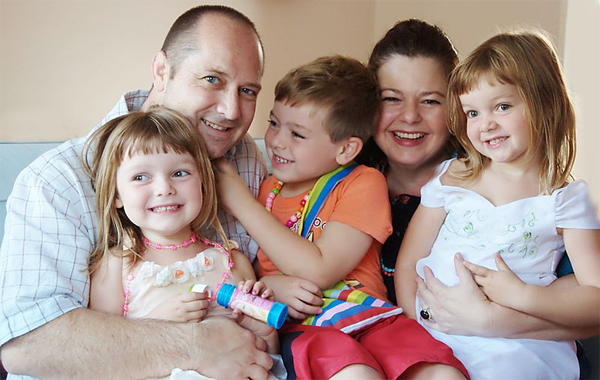
Source: "Happy family"(http://commons.wikimedia.org/wiki/File:Happy_family_%281%29.jpg) by Catherine Scott used under the CC-BY-SA 2.0 (http://creativecommons.org/licenses/by-sa/2.0/deed.en)
In addition to our kin, we desire to protect, better, and heighten the well-beingness of our ingroup— those we view every bit being similar and important to u.s.a. and with whom nosotros share close social connections, even if those people do not actually share our genes. Perhaps y'all remember a time when you helped friends movement all their furniture into a new home, even though you would have preferred to be doing something more benign for yourself, such as studying or relaxing. You wouldn't have helped strangers in this manner, just you lot did it for your friends because you felt close to and cared about them. The tendency to help the people nosotros feel close to, fifty-fifty if they are not related to us, is probably due in part to our evolutionary past: the people nosotros were closest to were ordinarily those nosotros were related to.
Other-Concern
Although we are primarily concerned with the survival of ourselves, our kin, and those who we feel are similar and important to us, we too want to connect with and be accepted by other people more than generally—the goal of other-business organization. We live together in communities, we work together in piece of work groups, nosotros may worship together in religious groups, and we may play together on sports teams and through clubs. Affiliating with other people—even strangers—helps u.s.a. meet a fundamental goal: that of finding a romantic partner with whom we can have children. Our connections with others also provide united states of america with opportunities that we would not have on our own. We can go to the grocery store to purchase milk or eggs, and we can hire a carpenter to build a business firm for us. And we ourselves do work that provides goods and services for others. This mutual cooperation is beneficial both for united states of america and for the people effectually us. We also chapter because we enjoy existence with others, being office of social groups, and contributing to social discourse (Leary & Cox, 2008).
What the other-concern motive means is that we do non ever put ourselves first. Being homo besides involves caring nigh, helping, and cooperating with other people. Although our genes are themselves "selfish" (Dawkins, 2006), this does not mean that individuals e'er are. The survival of our own genes may be improved by helping others, even those who are not related to us (Krebs, 2008; Park, Schaller, & Van Vugt, 2008). Simply as birds and other animals may give out warning calls to other animals to indicate that a predator is nearby, humans appoint in altruistic behaviors in which they assist others, sometimes at a potential cost to themselves.
In short, man beings behave morally toward others—they sympathise that it is wrong to damage other people without a strong reason for doing so, and they brandish compassion and even altruism toward others (Goetz, Keltner, & Simon-Thomas, 2010; Turiel, 1983). As a result, negative behaviors toward others, such every bit bullying, cheating, stealing, and aggression, are unusual, unexpected, and socially disapproved. Of course this does non mean that people are e'er friendly, helpful, and nice to each other—powerful social situations tin and do create negative behaviors. But the fundamental human motivation of other-concern does mean that hostility and violence are the exception rather than the rule of homo behavior.
Sometimes the goals of cocky-concern and other-concern go hand in hand. When we fall in love with another person, it is in function virtually a business for connecting with someone else but is besides about self-concern—falling in dearest makes usa experience good near ourselves. And when nosotros volunteer to help others who are in need, information technology is in function for their benefit but also for us. We feel good when we aid others. At other times, however, the goals of self-business organisation and other-business organization conflict. Imagine that you are walking across campus and yous see a man with a knife threatening another person. Practice you arbitrate, or do you turn away? In this case, your want to assist the other person (other-business) is in direct conflict with your desire to protect yourself from the danger posed past the state of affairs (self-business concern), and you lot must determine which goal to put first. We will run across many more examples of the motives of self-concern and other-business concern, both working together and working confronting each other, throughout this book.

Source: "Formosan macaque" (http://en.wikipedia.org/wiki/File:Formosan_macaque.jpg) past KaurJmeb used under the CC-BY-SA 2.0 (http://creativecommons.org/licenses/by-sa/2.0/deed.en). "Old couple in a busy street" (https://world wide web.flickr.com/photos/damiel/19475138/) past Geir Halvorsen used nether the CC-Past-NC-SA 2.0 Generic (a href="https://creativecommons.org/licenses/by-nc-sa/ii.0/). "Elderly Care" (http://world wide web.flickr.com/photos/76039842@N07/7645318536/in/photostream/) by Mark Adkins used under the CC-Past-NC-SA 2.0 (https://creativecommons.org/licenses/by-nc-sa/2.0/). "Piggy Back" (https://www.flickr.com/photos/cazatoma/4928209598/) by Tricia J used nether the CC-By-NC-ND two.0 (http://creativecommons.org/licenses/by-nc-nd/2.0/).
The Social State of affairs Creates Powerful Social Influence
When people are asked to indicate the things they value the most, they ordinarily mention their social situation—that is, their relationships with other people (Baumeister & Leary, 1995; Fiske & Haslam, 1996). When we work together on a class project, volunteer at a homeless shelter, or serve on a jury in a courtroom trial, nosotros count on others to work with us to become the job done. We develop social bonds with those people, and we look that they volition come up through to assist us meet our goals. The importance of others shows upwards in every attribute of our lives—other people teach us what we should and shouldn't practice, what we should and shouldn't think, and even what we should and shouldn't like and dislike.
In improver to the people with whom nosotros are currently interacting, nosotros are influenced by people who are not physically present but who are notwithstanding role of our thoughts and feelings. Imagine that you are driving home on a deserted country road tardily at night. No cars are visible in any direction, and y'all can see for miles. You come to a finish sign. What practise yous practise? Most likely, you stop at the sign, or at to the lowest degree slow down. Y'all do so considering the behavior has been internalized: even though no one is at that place to watch you, others are nevertheless influencing yous—you've learned almost the rules and laws of order, what'south right and what's wrong, and you tend to obey them. Nosotros carry our ain personal social situations—our experiences with our parents, teachers, leaders, authorities, and friends—effectually with us every day.
An important principle of social psychology, one that will be with usa throughout this book, is that although individuals' characteristics do matter, the social state of affairs is oft a stronger determinant of behavior than is personality. When social psychologists analyze an consequence such every bit the Holocaust, they are likely to focus more on the characteristics of the situation (due east.thou., the strong leader and the group pressure provided past the other group members) than on the characteristics of the perpetrators themselves. Equally an instance, we will run into that fifty-fifty ordinary people who are neither bad nor evil in any fashion can nonetheless be placed in situations in which an authority effigy is able to lead them to appoint in evil behaviors, such as applying potentially lethal levels of electrical shock (Milgram, 1974).
In addition to discovering the remarkable extent to which our beliefs is influenced by our social situation, social psychologists have discovered that nosotros often practice not recognize how important the social situation is in determining behavior. Nosotros often wrongly think that we and others human activity entirely on our ain accord, without whatsoever external influences. It is tempting to assume that the people who commit farthermost acts, such equally terrorists or members of suicide cults, are unusual or extreme people. And even so much enquiry suggests that these behaviors are caused more by the social situation than they are by the characteristics of the individuals and that it is wrong to focus then strongly on explanations of individuals' characteristics (Gilbert & Malone, 1995).
There is perhaps no clearer example of the powerful influence of the social situation than that found in research showing the enormous role that others play in our concrete and mental health. ƒC (Diener, Suh, Lucas, & Smith, 1999; Diener, Tamir, & Scollon, 2006).
Social Psychology in the Public Interest
How the Social State of affairs Influences Our Mental and Physical Health
In comparing with those who do not feel that they have a network of others they can rely on, people who feel that they have adequate social support study being happier and have likewise been found to have fewer psychological problems, including eating disorders and mental disease (Diener, Suh, Lucas, & Smith, 1999; Diener, Tamir, & Scollon, 2006).
People with social support are less depressed overall, recover faster from negative events, and are less likely to commit suicide (Au, Lau, & Lee, 2009; Bertera, 2007; Compton, Thompson, & Kaslow, 2005; Skärsäter, Langius, Ågren, Häagström, & Dencker, 2005). Married people report being happier than unmarried people (Pew, 2006), and overall, a happy marriage is an splendid class of social back up. Ane of the goals of effective psychotherapy is to help people generate amend social support networks because such relationships have such a positive result on mental health.
In improver to having better mental health, people who have adequate social back up are more physically healthy. They have fewer diseases (such as tuberculosis, heart attacks, and cancer), live longer, have lower blood pressure, and take fewer deaths at all ages (Cohen & Wills, 1985; Stroebe & Stroebe, 1996). Sports psychologists accept fifty-fifty establish that individuals with higher levels of social back up are less likely to exist injured playing sports and recover more than rapidly from injuries they practise receive (Hardy, Richman, & Rosenfeld, 1991). These differences appear to be due to the positive furnishings of social back up on physiological functioning, including the immune system.
The opposite of social support is the feeling of existence excluded or ostracized. Feeling that others are excluding us is painful, and the hurting of rejection may linger even longer than physical pain. People who were asked to recollect an event that caused them social pain (e.g., betrayal by a person very shut to them) rated the pain as more intense than they rated their memories of intense physical pain (Chen, Williams, Fitness, & Newton, 2008). When people are threatened with social exclusion, they subsequently express greater interest in making new friends, increase their want to piece of work cooperatively with others, form more positive start impressions of new potential interaction partners, and fifty-fifty become more able to discriminate between real smiles and fake smiles (Bernstein, Young, Brown, Sacco, & Claypool, 2008; Maner, DeWall, Baumeister, & Schaller, 2007).
Considering connecting with others is such an of import part of man experience, we may sometimes withhold amalgamation from or ostracize other people in order to attempt to strength them to conform to our wishes. When individuals of the Amish religion violate the rulings of an elder, they are placed under a Meidung. During this time, and until they make apology, they are not spoken to by community members. And people frequently utilize the "silent treatment" to express their disapproval of a friend's or partner's behavior. The pain of ostracism is specially potent in adolescents (Sebastian, Viding, Williams, & Blakemore, 2010).
The use of ostracism has also been observed in parents and children, and fifty-fifty in Internet games and chat rooms (Williams, Cheung, & Choi, 2000).The silent treatment and other forms of ostracism are popular because they work. Withholding social advice and interaction is a powerful weapon for punishing individuals and forcing them to alter their behaviors. Individuals who are ostracized report feeling lone, frustrated, sad, and unworthy and having lower self-esteem (Bastian & Haslam, 2010).
Taken together, then, social psychological inquiry results suggest that ane of the most of import things you can do for yourself is to develop a stable support network. Reaching out to other people benefits those who go your friends (because yous are in their back up network) and has substantial benefits for you.
Social Influence Creates Social Norms
In some cases, social influence occurs rather passively, without any obvious intent of 1 person to influence another, such as when we learn about and adopt the beliefs and behaviors of the people around us, often without really existence enlightened that we are doing so. Social influence occurs when a young child adopts the behavior and values of his or her parents, or when someone starts to like jazz music, without actually being aware of it, because a roommate plays a lot of information technology. In other cases, social influence is anything but subtle; it involves one or more than individuals actively attempting to change the beliefs or behaviors of others, every bit is evident in the attempts of the members of a jury to get a dissenting member to modify his or her stance, the employ of a popular sports figure to encourage children to buy certain products, or the letters that cult leaders give to their followers to encourage them to appoint in the behaviors required of the group.
1 outcome of social influence is the evolution of social norms—the ways of thinking, feeling, or behaving that are shared past group members and perceived past them as advisable (Asch, 1955; Cialdini, 1993). Norms include customs, traditions, standards, and rules, equally well as the general values of the group. Through norms, nosotros learn what people really do ("people in the United states are more likely to swallow scrambled eggs in the forenoon and spaghetti in the evening, rather than vice versa") and besides what we should exercise ("do unto others every bit you would have them do unto you") and shouldn't do ("do non make racist jokes"). There are norms about most every possible social behavior, and these norms take a big influence on our actions.
Different Cultures Accept Different Norms
The social norms that guide our everyday behaviors and that create social influence derive in large function from our culture. A culture represents a grouping of people, normally living within a given geographical region, who share a common set of social norms, including religious and family unit values and moral beliefs (Fiske, Kitayama, Markus, & Nisbett, 1998; Matsumoto, 2001). The culture in which we live affects our thoughts, feelings, and behavior through instruction, imitation, and other forms of social transmission (Mesoudi, 2009). Information technology is non inappropriate to say that our culture defines our lives just as much as our evolutionary feel does.
Cultures differ in terms of the particular norms that they find of import and that guide the beliefs of the group members. Social psychologists take found that at that place is a cardinal difference in social norms between Western cultures (including the United States, Canada, Western Europe, Australia, and New Zealand) and East Asian cultures (including China, Japan, Taiwan, Korea, India, and Southeast Asia). Norms in Western cultures are primarily oriented toward individualism—cultural norms, common in Western societies, that focus primarily on self-enhancement and independence. Children in Western cultures are taught to develop and value a sense of their personal cocky and to see themselves every bit largely split from the people around them. Children in Western cultures feel special about themselves—they savor getting aureate stars on their projects and the all-time grade in the class (Markus, Mullally, & Kitayama, 1997). Adults in Western cultures are oriented toward promoting their own private success, oft in comparison with (or even at the expense of) others. When asked to describe themselves, individuals in Western cultures by and large tend to indicate that they like to "practise their ain thing," adopt to alive their lives independently, and base their happiness and cocky-worth on their own personal achievements. In short, in Western cultures the emphasis is on cocky-concern.
Norms in the Eastward Asian cultures, on the other hand, are more than focused on other-concern. These norms point that people should be more fundamentally continued with others and thus are more oriented toward interdependence, or collectivism. In East Asian cultures, children are taught to focus on developing harmonious social relationships with others, and the predominant norms relate to group togetherness, connectedness, and duty and responsibility to their family. The members of Eastward Asian cultures, when asked to depict themselves, indicate that they are peculiarly concerned about the interests of others, including their close friends and their colleagues. As one case of these cultural differences, inquiry conducted by Shinobu Kitayama and his colleagues (Uchida, Norasakkunkit, & Kitayama, 2004) found that East Asians were more likely than Westerners to feel happiness as a result of their connections with other people, whereas Westerners were more likely to experience happiness as a result of their ain personal accomplishments.
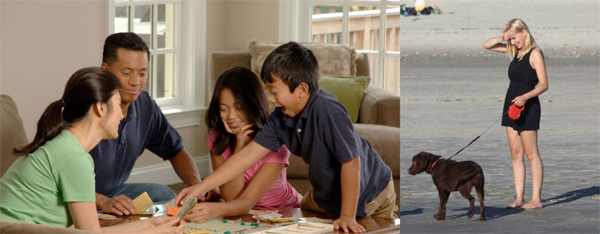
Sources: "Family playing a board game" (http://commons.wikimedia.org/wiki/File:Family_playing_a_board_game_%283%29.jpg) past Neb Branson in the public domain (http://en.wikipedia.org/wiki/Public_domain). "Westward Wittering Wonderful Every bit Always" (https://www.flickr.com/photos/gareth1953/7976359044/sizes/l/) by Gareth Williams used under CC Past ii.0 (https://creativecommons.org/licenses/by/two.0/).
Other researchers have studied other cultural differences, such every bit variations in orientations toward time. Some cultures are more concerned with arriving and departing according to a stock-still schedule, whereas others consider time in a more than flexible manner (Levine & Norenzayan, 1999). Levine and colleagues (1999) found that "the pace of life," as assessed by average walking speed in downtown locations and the speed with which postal clerks completed a simple request, was fastest in Western countries (simply also in Japan) and slowest in economically undeveloped countries. It has as well been argued that there are differences in the extent to which people in different cultures are bound by social norms and customs, rather than being free to limited their own individuality without regard to considering social norms (Gelfand et al., 1996). And there are also cultural differences regarding personal space, such equally how close individuals stand up to each other when talking, as well every bit differences in the communication styles individuals employ.
It is of import to exist aware of cultures and cultural differences, at least in role because people with different cultural backgrounds are increasingly coming into contact with each other as a result of increased travel and clearing, and the evolution of the Internet and other forms of communication. In Canada, for instance, there are many unlike ethnic groups, and the proportion of the population that comes from minority (not-White) groups is increasing from yr to yr. Minorities will account for a much larger proportion of the total new entries into the Canadian workforce over the next decades. Roughly 21% of the Canadian population is foreign-born, which is easily the highest among G8 countries. By 2031, visible minorities are projected to make upward 63% of the population of Toronto and 59% of Vancouver (Statistics Canada, 2011). Although these changes create the potential for greater cultural understanding and productive interaction, they may also produce unwanted social disharmonize. Being aware of cultural differences and considering their influence on how nosotros behave toward others is an important role of a basic understanding of social psychology and a topic that we will return to often in this volume.
- The history of social psychology includes the study of attitudes, group behavior, altruism and aggression, civilisation, prejudice, and many other topics.
- Social psychologists study real-world problems using a scientific approach.
- Thinking about your own interpersonal interactions from the indicate of view of social psychology can help you better understand and reply to them.
- Social psychologists report the person-situation interaction: how characteristics of the person and characteristics of the social situation interact to determine behavior.
- Many human social behaviors take been selected by evolutionary accommodation.
- The social state of affairs creates social norms—shared ways of thinking, feeling, and behaving.
- Cultural differences—for example, in individualistic versus collectivistic orientations—guide our everyday behavior.
- Go to the website http://www.socialpsychology.org and click on two of the "psychology headlines from around the world" presented on the right-hand side of the folio. Read through the two articles and write a short (120 words) summary of each.
- Consider a recent situation from your personal experience in which you focused on an private and a cause of his or her behaviour. Could you reinterpret their behavior using a situational explanation?
- Go to the website http://world wide web.socialpsychology.org/social-figures.htm and choose ane of the important figures in social psychology listed there. Gear up a cursory (250 word) report about how this person contributed to the field of social psychology.
References
Ackerman, J. M., & Kenrick, D. T. (2008). The costs of benefits: Aid-refusals highlight key trade-offs of social life.Personality and Social Psychology Review, 12(2), 118–140.
Asch, Due south. (1955). Opinions and social pressure.Scientific American, 11, 32.
Asch, S. E. (1952).Social psychology. Englewood Cliffs, NJ: Prentice-Hall.
Au, A., Lau, Due south., & Lee, Thousand. (2009). Suicide ideation and low: The moderation furnishings of family cohesion and social cocky-concept.Adolescence,44(176), 851–868. Retrieved from Academic Search Premier Database.
Barrett, H. C., & Kurzban, R. (2006). Modularity in cognition: Framing the debate.Psychological Review, 113(three), 628–647.
Bastian, B., & Haslam, N. (2010). Excluded from humanity: The dehumanizing furnishings of social ostracism.Journal of Experimental Social Psychology, 46(ane), 107–113.
Baumeister, R., & Leary, M. (1995). The demand to vest: Desire for interpersonal attachments as a fundamental human motivation.Psychological Bulletin, 117, 497–529.
Berkowitz, L. (1974).Aggression: A social psychological analysis. New York, NY: McGraw-Hill.
Bernstein, Thousand. J., Young, Due south. G., Brown, C. M., Sacco, D. F., & Claypool, H. 1000. (2008). Adaptive responses to social exclusion: Social rejection improves detection of real and faux smiles.Psychological Science, 19(10), 981–983.
Bertera, Eastward. (2007). The function of positive and negative social exchanges between adolescents, their peers and family unit equally predictors of suicide ideation.Child & Adolescent Social Work Journal,24(six), 523–538. doi:ten.1007/s10560-007-0104-y.
Buss, D. M. (2000).The dangerous passion: Why jealousy is as necessary as love and sex activity. New York, NY: Gratuitous Press.
Buss, D., & Kenrick, D. (1998). Evolutionary social psychology. In D. T. Gilbert, S. T. Fiske, & G. Lindzey (Eds.),Handbook of social psychology (4th ed., Vol. ii, pp. 982–1026). Boston, MA: McGraw-Hill.
Chen, Z., Williams, K. D., Fitness, J., & Newton, Due north. C. (2008). When hurt will not heal: Exploring the chapters to relive social and concrete pain.Psychological Science, 19(eight), 789–795.
Cialdini, R. B. (1993).Influence: Science and practice (3rd ed.). New York, NY: HarperCollins Higher Publishers.
Cohen, Southward., & Wills, T. (1985). Stress, social support, and the buffering hypothesis.Psychological Bulletin, 98, 310–357.
Compton, Yard., Thompson, N., & Kaslow, N. (2005). Social surround factors associated with suicide attempt among depression-income African Americans: The protective role of family relationships and social support.Social Psychiatry & Psychiatric Epidemiology,40(3), 175–185. doi:x.1007/s00127-005-0865-6.
Darley, J. Thousand., & Latané, B. (1968). Bystander intervention in emergencies: Improvidence of responsibility.Journal of Personality and Social Psychology, 8(4, Pt. i), 377–383.
Dawkins, R. (2006).The selfish gene. Oxford, England: Oxford University Printing.
Diener, E., Suh, E. Grand., Lucas, R. E., & Smith, H. L. (1999). Subjective well-existence: Three decades of progress.Psychological Bulletin, 125(2), 276–302.
Diener, E., Tamir, M., & Scollon, C. N. (2006). Happiness, life satisfaction, and fulfillment: The social psychology of subjective well-being. In P. A. M. Van Lange (Ed.),Bridging social psychology: Benefits of transdisciplinary approaches. Mahwah, NJ: Lawrence Erlbaum Associates.
Eagly, A. H., & Chaiken, South. (1993).The psychology of attitudes. Fort Worth, TX: Harcourt Brace Jovanovich.
Festinger, 50. (1957).A theory of cognitive racket. Evanston, IL: Row, Peterson.
Fiske, A. P., & Haslam, N. (1996). Social cognition is thinking most relationships.Current Directions in Psychological Science, 5(5), 137–142.
Fiske, A., Kitayama, S., Markus, H., & Nisbett, R. (1998). The cultural matrix of social psychology. In D. Gilbert, S. Fiske, & Thou. Lindzey (Eds.),The handbook of social psychology (4th ed., pp. 915–981). New York, NY: McGraw-Hill.
Fiske, Due south. T., & Taylor, Due south. E. (2008).Social knowledge: From brains to culture. Boston, MA: McGraw-Hill.
Fiske, South. T., Bersoff, D. N., Borgida, Eastward., Deaux, Yard., & Heilman, M. Due east. (1991). Social science research on trial: The use of sex stereotyping enquiry inPrice Waterhouse vs. Hopkins.American Psychologist, 46, 1049–1060.
Gelfand, M. J., Raver, J. L., Nishii, L., Leslie, Fifty. One thousand., Lun, J., Lim, B. C.,…Yamagushi, S. (2011). Differences between tight and loose cultures: A 33-nation written report.Scientific discipline, 332(6033), 1100–1104.
Gilbert, D., & Malone, P. (1995). The correspondence bias.Psychological Review, 117, 21–38.
Goetz, J. Fifty., Keltner, D., & Simon-Thomas, E. (2010). Pity: An evolutionary analysis and empirical review.Psychological Bulletin, 136(3), 351–374.
Haney, C., Banks, C., & Zimbardo, P. (1973). Interpersonal dynamics in a simulated prison.International Journal of Criminology and Penology, 1, 69–87.
Hardy, C. J., Richman, J. One thousand., & Rosenfeld, 50. B. (1991). The role of social support in the life stress/injury human relationship.The Sports Psychologist, 5, 128–139.
Herrmann, E., Call, J., Hernández-Lloreda, Yard. V., Hare, B., & Tomasello, Yard. (2007). Humans have evolved specialized skills of social knowledge: The cultural intelligence hypothesis.Science, 317(5843), 1360–1366.
Hovland, C. I., Janis, I. L., & Kelley, H. H. (1963).Advice and persuasion. Oxford, England: Yale University Press.
Janis, I. L. (1972).Victims of groupthink: A psychological report of foreign policy decisions and fiascos. Boston, MA: Houghton-Mifflin.
Kahneman, D., Slovic, P., & Tversky, A. (1982).Judgment nether doubtfulness: Heuristics and biases. Cambridge, England: Cambridge Academy Press.
Krebs, D. L. (2008). Morality: An evolutionary account.Perspectives on Psychological Science, 3(three), 149–172.
Kruglanski, A., & Stroebe, W. (2011).Handbook of the history of social psychology. Philadelphia, PA: Psychology Printing.
Leary, M. R., & Cox, C. B. (Eds.). (2008).Belongingness motivation: A mainspring of social activity. New York, NY: Guilford Press.
Levine, R. V., & Norenzayan, A. (1999). The pace of life in 31 countries.Journal of Cantankerous-Cultural Psychology, 30(2), 178–205.
Lieberman, M. D. (2010). Social cognitive neuroscience. In S. T. Fiske, D. T. Gilbert, & G. Lindzey (Eds.),Handbook of social psychology (5th ed., Vol. 1, pp. 143–193). Hoboken, NJ: John Wiley & Sons.
Maner, J. K., DeWall, C. N., Baumeister, R. F., & Schaller, M. (2007). Does social exclusion motivate interpersonal reconnection? Resolving the "porcupine trouble."Journal of Personality and Social Psychology, 92(one), 42–55.
Markus, H. R., Mullally, P., & Kitayama, Due south. (1997). Selfways: Diversity in modes of cultural participation. In U. Neisser & D. A. Jopling (Eds.),The conceptual self in context: Civilisation, feel, self-understanding (pp. xiii–61). New York, NY: Cambridge University Press.
Matsumoto, D. (Ed.). (2001).The handbook of culture and psychology. New York, NY: Oxford University Press.
McDougall, W. (2003. original published 1908).An introduction to social psychology. Mineola, NY: Dover.
Mesoudi, A. (2009) How cultural evolutionary theory can inform social psychology, and vice versa.Psychological Review, 116, 929–952.
Milgram, S. (1974).Obedience to authority: An experimental view. New York, NY: Harper & Row.
Park, J. H., Schaller, K., & Van Vugt, Thousand. (2008). Psychology of human kin recognition: Heuristic cues, erroneous inferences, and their implications.Review of Full general Psychology, 12(3), 215–235.
Pew Research Center. (2006, February 13). Are we happy yet? Retrieved from http://pewresearch.org/pubs/301/are-nosotros-happy-still
Pinker, S. (2002).The bare slate: The modern denial of human nature. New York, NY: Penguin Putnam.
Ross, E. A. (1974; original published 1908).Social psychology. New York, NY: Arno Printing.
Sebastian, C., Viding, E., Williams, Thou. D., & Blakemore, Due south.-J. (2010). Social brain evolution and the affective consequences of ostracism in adolescence.Brain and Cognition, 72(1), 134–145.
Sherif, M. (1936).The psychology of social norms. New York, NY: Harper & Row.
Skärsäter, I., Langius, A., Ågren, H., Häggström, L., & Dencker, M. (2005). Sense of coherence and social support in relation to recovery in first-episode patients with major depression: A one-yr prospective study.International Journal of Mental Health Nursing,14(4), 258–264. doi:ten.1111/j.1440-0979.2005.00390
Statistics Canada. (2011). Ethnic diversity and immigration. Retrieved from http://www.statcan.gc.ca/pub/11-402-x/2011000/chap/imm/imm-eng.htm
Staub, E., Pearlman, Fifty. A., & Bilali, R. (2010). Understanding the roots and impact of violence and psychological recovery as avenues to reconciliation afterward mass violence and intractable conflict: Applications to national leaders, journalists, community groups, public education through radio, and children. In G. Salomon & East. Cairns (Eds.), Handbook of Peace Pedagogy. New York: Psychology Printing.
Stroebe, W., & Stroebe, M. (1996). The social psychology of social support. In Due east. T. Higgins & A. W. Kruglanski (Eds.),Social psychology: Handbook of basic principles (pp. 597–621). New York, NY: Guilford Printing.
Triplett, N. (1898). The dynamogenic factors in pacemaking and competition.American Periodical of Psychology, 9(4), 507–533.
Turiel, East. (1983).The development of social knowledge: Morality and convention. Cambridge, England: Cambridge University Printing.
Uchida, Y., Norasakkunkit, V., & Kitayama, S. (2004). Cultural constructions of happiness: Theory and empirical testify.Periodical of Happiness Studies, 5(3), 223–239.
Williams, One thousand. D., Cheung, C. One thousand. T., & Choi, Due west. (2000). Cyberostracism: Effects of existence ignored over the Net.Periodical of Personality & Social Psychology, 79(five), 748–762. Workman, L., & Reader, W. (2008).Evolutionary psychology: An introduction (2nd ed.).. New York, NY: Cambridge University Press.
Source: https://opentextbc.ca/socialpsychology/chapter/defining-social-psychology-history-and-principles/
0 Response to "Guided Reading Activity 12-2 Biological and Social Motives"
Post a Comment